

The Ultimate Guide to Fine Rings: Meaning, Styles, and Why We Wear Them
There is an intimate magic unique to the ring. Unlike necklaces or earrings, which are worn primarily for the view of others, a ring sits directly in your own line of sight. Every time you gesture, write, or look down at your hands, it is there—a glistening testament to a promise, a memory, or your own personal aesthetic.
Rings have held an important place in jewelry traditions for centuries. From simple decorative bands to elaborate gemstone designs, they can represent personal style, meaningful relationships, cultural traditions, or significant life events. Rings are available in many materials and price ranges, including fine jewelry and fashion jewelry. Understanding their different styles and historical associations can help you choose a piece that reflects your preferences, occasion, and budget.
1. Engagement Rings: The Icon of Devotion
Engagement rings have a long and varied history, with ring-giving traditions associated with betrothal and marriage in several societies. Rings were used in ancient Rome, although their forms and meanings differed from modern engagement jewelry. A frequently cited milestone in diamond engagement-ring history is the 1477 betrothal of Archduke Maximilian of Austria and Mary of Burgundy. Diamond engagement rings became more widely popular over subsequent centuries, influenced by changing fashions, marketing, and social customs.
Why They Are Worn
In many Western traditions, engagement rings are worn on the fourth finger of the left hand. This custom is often associated with the historical belief in the vena amoris, or “vein of love,” although there is no special anatomical vein connecting that finger directly to the heart. Ring placement varies across cultures and personal preferences. Today, an engagement ring may symbolize a commitment to marriage, a meaningful relationship, or a shared future.
Popular Styles
- The Solitaire: A ring featuring one prominent central stone, which may be a natural gemstone, laboratory-grown gemstone, simulated stone, or another decorative material. Its simple design draws attention to the centrepiece.
- The Halo: A central stone surrounded by smaller decorative stones. This arrangement can create the appearance of a larger central design and is available in both fine and fashion jewelry.
- The Three-Stone (Trilogy): A ring featuring three prominent stones. These designs are sometimes associated with the past, present, and future of a relationship, although their meaning is personal to the wearer.
2. Wedding Bands: The Eternal Circle
Wedding bands are commonly exchanged as symbols of marriage, partnership, and commitment. Their circular shape is often interpreted as representing continuity or enduring connection, although traditions and personal interpretations vary. Wedding bands range from simple metal designs to decorative styles featuring stones, engraving, or distinctive finishes.
Why They Are Worn
Many couples exchange wedding bands during their ceremony and wear them as personal symbols of commitment. In some traditions, the wedding band is worn beneath the engagement ring on the same finger, while other customs use a different hand or arrangement. The choice of how to wear wedding jewelry ultimately depends on cultural traditions, comfort, and personal preference.
Modern Variations
Gone are the days when a wedding band had to be a plain, uniform gold pipe. Modern luxury bridal fashion favors customized bands:
- Eternity Bands: Adorned with a continuous, unbroken line of identically cut diamonds or gemstones wrapped entirely around the band.
- Contoured Bands: Curved or chevron-shaped bands designed specifically to hug the contours of a low-set engagement ring, ensuring the two pieces sit flush against one another.
3. Signet Rings: The Mark of Identity
Signet rings developed from a long history of personal seals used in ancient societies, including Mesopotamia and Egypt. Designs and materials varied across different periods and cultures. Some signet rings carried symbols, personal identifiers, or engraved designs that could be pressed into clay or wax to authenticate documents. In later European traditions, family crests and coats of arms became familiar signet-ring motifs. Today, the style is valued for its historical associations and distinctive appearance.
Why They Are Worn
Today, signet rings have shifted from strict legal tools to highly fashionable expressions of heritage and individuality. They are frequently worn on the pinky or index finger. Whether passed down through generations as a family heirloom or custom-engraved with personal initials, a signet ring bridges the gap between historical significance and modern elegance.
4. Cocktail Rings: Bold, Expressive Glamour
Cocktail rings are strongly associated with the bold jewelry fashions of the 1920s and the social culture of the Prohibition era in the United States. Large decorative rings became popular accessories for evening wear, attracting attention through prominent stones, colourful designs, and elaborate settings. Although the precise origin of the term is not always documented consistently, cocktail rings remain associated with expressive, statement-making style.
Why They Are Worn
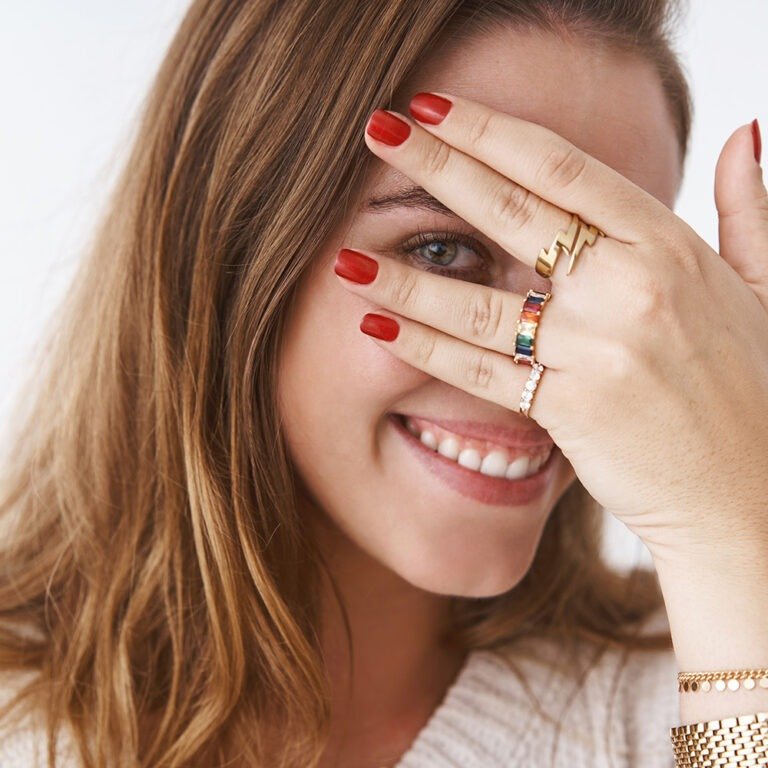
Cocktail rings are designed to create a noticeable decorative effect. They often feature larger central stones, colourful accents, or distinctive shapes, with materials ranging from precious gemstones to simulated stones and other fashion-jewelry components. Traditionally, statement rings have often been worn on the right hand, but there is no requirement to follow a particular placement. They can complement evening outfits, celebrations, or everyday looks depending on personal style.
5. Birthstone and Eternity Rings: Commemorating Life’s Milestones
Rings are brilliant physical anchors for memory. Birthstone rings feature specific gemstones tied to the month of a person’s birth—such as rich sapphires for September, fiery rubies for July, or delicate emeralds for May.
Likewise, milestone rings—often designed as stackable anniversary bands—are given to celebrate major life chapters, such as the birth of a child, a promotion, or a significant wedding anniversary.
| Ring type | Common design characteristics | Common meaning or purpose | Typical placement |
|---|---|---|---|
| Engagement ring | Central stone or decorative setting; materials vary | Relationship commitment | Often ring finger; cultural customs vary |
| Wedding band | Plain or decorated band; available in many metals and finishes | Marriage or partnership | Often ring finger |
| Signet ring | Flat or raised decorative face, sometimes engraved | Identity, heritage or personal style | Often pinky or index finger |
| Cocktail ring | Larger decorative stone or statement design | Fashion and self-expression | Any comfortable finger |
| Birthstone ring | Features a stone associated with a birth month | Personal meaning or gifting | Personal preference |
| Eternity-style ring | Decorative stones arranged along part or all of a band | Celebration, commitment or styling | Personal preference |
Choosing Your Perfect Ring
When curating your jewelry collection, remember that rules are meant to be broken. While tradition dictates where wedding rings or signets “should” go, contemporary luxury fashion invites you to mix metals, stack delicate bands together, and wear statement pieces on whichever finger feels right to you.
When choosing a ring, consider its design, materials, construction, comfort, and intended use. Fine jewelry may use precious metals and natural or laboratory-grown gemstones, while fashion jewelry may incorporate plated metals, stainless steel, simulated stones, and other decorative materials. Quality and durability vary between individual products, so review each product’s listed specifications and care instructions before purchasing. Claims about gemstone authenticity, metal purity, ethical sourcing, or special certifications should be supported by reliable product information. Learn more about professional gemstone identification from the Gemological Institute of America. The right ring is one that suits your style, needs, and budget. Browse different designs in our rings collection.
Explore rings and other jewelry styles in our online jewelry collection. Review individual product descriptions, materials, sizes, and care information to find an option that matches your preferences.