
The Return of the Brooch: Fine Jewelry’s Most Versatile Masterpiece
Brooches have a long history as decorative accessories and practical clothing fasteners. Although often associated with vintage fashion, they remain a versatile styling option in contemporary wardrobes. Available in designs ranging from understated pins to elaborate statement pieces, brooches offer opportunities for personal expression without requiring precious metals or expensive gemstones. Their appeal lies in the many ways they can complement clothing and accessories.
Unlike jewelry designed primarily for the fingers, ears, or neck, brooches can be positioned on different parts of an outfit. Depending on their weight, pin design, and fastening mechanism, they may be worn on jacket lapels, scarves, coats, or suitable fabric accessories. Some can also be incorporated into hair accessories when attached securely and used appropriately. Always consider fabric compatibility, placement, and fastening safety before wearing a brooch.
A Storied Heritage: From Practical Fastener to High Art
The history of brooches is closely connected with the development of clothing fasteners and decorative metalwork. In several ancient societies, including those associated with Roman and Celtic traditions, fibulae were used to secure garments. These fasteners appeared in different forms and materials, including bronze and iron, and could serve both practical and decorative purposes. Their designs evolved across regions and historical periods, contributing to the development of the ornamental brooches familiar today.
Over time, brooches developed into decorative accessories as well as practical fasteners. Examples from different periods, including the Renaissance and Victorian era, feature techniques such as engraving, enamel decoration, portrait motifs, and ornamental stone settings. Some brooches also carried personal or commemorative meanings. Their materials and symbolism varied widely, and not every historical piece was made with precious metals or rare gemstones.
The Anatomy of Choice: Iconic Brooch Styles
Exploring different brooch styles can help you find designs that suit your wardrobe, personal preferences, and occasions. Some feature botanical details, while others emphasize geometric shapes or decorative portraits. The following examples illustrate several recognizable styles and their design characteristics:
1. The Spray Brooch
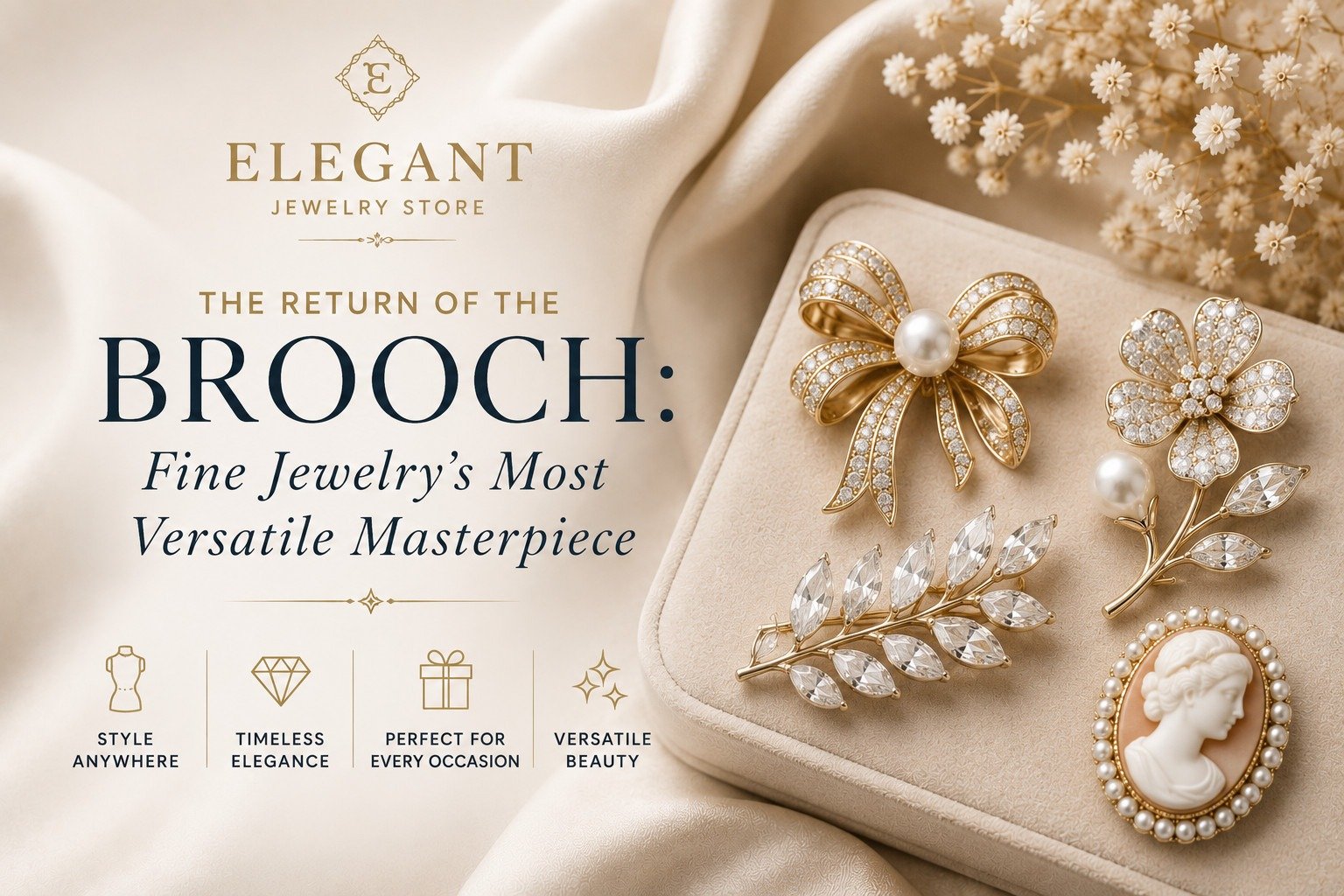
Inspired by botanical forms, spray brooches often feature decorative arrangements resembling flowers, leaves, branches, or bouquets. Traditional fine-jewelry versions may incorporate precious metals, pearls, and gemstones, while fashion-jewelry designs can use plated metals, simulated stones, beads, or other materials. Their branching shapes can create a distinctive visual effect when positioned on a suitable jacket lapel or other supportive fabric.
2. The Bar Brooch
Bar brooches are characterized by elongated, often horizontal designs. Some feature rows of decorative stones, engraved details, textured metalwork, or geometric patterns. Fine-jewelry examples may use genuine gemstones, while other versions incorporate simulated stones or alternative decorative materials. Their streamlined shape can complement jackets, blouses, and tailored outfits when the fabric can support the piece.
3. The Cameo and Intaglio
Cameo designs feature a raised image or motif against a recessed background and have traditionally been produced in materials such as shell and layered stone. Intaglio designs use a recessed engraving or impression rather than a raised relief. Modern brooches inspired by these techniques may incorporate carved materials, moulded components, or other decorative methods. Their historical associations make them recognizable options for vintage-inspired styling. You can also explore vintage-inspired jewelry trends in our retrospective on 2023 fashion.
| Brooch style | Common design characteristics | Possible decorative materials | Styling and fabric considerations |
| Spray | Botanical branches, leaves or floral arrangements | Metals, beads, decorative stones, pearls or pearl-inspired accents | Consider supportive fabrics for heavier or larger designs |
| Bar | Elongated, linear or geometric shape | Metals, engraving, natural or simulated stones | May suit collars or lapels; check pin security and fabric sensitivity |
| Cameo | Raised portrait or decorative relief | Shell, stone, resin or other moulded materials | Can complement vintage-inspired outfits; check attachment and fabric suitability |
Redefining the Rules: How to Style a Modern Brooch
The greatest barrier to wearing a brooch is simply a lack of imagination. The modern luxury philosophy completely discards the old rule that a brooch must only live on the left lapel of a matching suit jacket.
To bring your fine brooches into the modern era, explore these unexpected, high-fashion placements:
1.The Crown Accent: High Impact.
Some lightweight brooches can be incorporated into hairstyles or decorative headbands when their fastenings are suitable for that purpose. A floral, geometric, or stone-inspired design may provide a distinctive accent. Avoid placing exposed sharp pins directly against the scalp, and ensure that any attachment is secure and will not catch or pull the hair. Not every brooch is suitable for use as a hair accessory.
2.The Button Alternative: Sleek & Tailored.
Fasten a striking bar or geometric brooch directly at the closed collar of a crisp, white button-down silk shirt. This placement mimics the structure of a high-end tuxedo bow tie, adding an instant injection of power-dressing style.
3.The Waistline Anchor: Fluid Drama.
A brooch can create a decorative focal point near the waist of a dress, sash, or other garment. Choose a design with an appropriate weight and fastening mechanism for the material. Heavy brooches may pull on delicate fabrics, and pins can leave holes or damage certain weaves. When in doubt, attach the brooch to a sturdier accessory or use a fastening method recommended for the garment.
Craftsmanship: The Weight of Luxury
When choosing a brooch at Elegant Jewelry Store, review the individual product’s listed materials, dimensions, weight, and fastening design. Brooches may be made from precious metals, plated alloys, simulated stones, or other decorative materials, depending on the product. Heavier designs generally require more supportive fabrics, while delicate materials such as silk, chiffon, and lightweight knits may be vulnerable to pulling, punctures, or distortion. Check how the fastening interacts with the fabric before wearing the piece, and avoid assuming that a particular material or clasp is suitable for every garment. Explore available designs in our brooches collection.
The fastening mechanism is an important consideration when selecting or wearing a brooch. Common designs include rotating safety clasps, trombone-style catches, and other pin closures. Their security depends on construction quality, condition, correct fastening, and appropriate use. No clasp can guarantee complete protection against accidental opening, pin exposure, or loss. Before wearing a brooch, check that the pin and catch are functioning properly and that the fastening is appropriate for the garment and intended activity.
A thoughtfully chosen brooch can be a versatile accessory that reflects personal style. Whether worn on a jacket, scarf, or suitable fabric accessory, it offers opportunities to experiment with different outfits and occasions. Its appeal may come from its design, personal significance, or the memories associated with wearing it.
Explore brooches and other jewelry styles in our online jewelry collection. Review individual product descriptions, materials, dimensions, and care information to find an accessory that matches your preferences.