
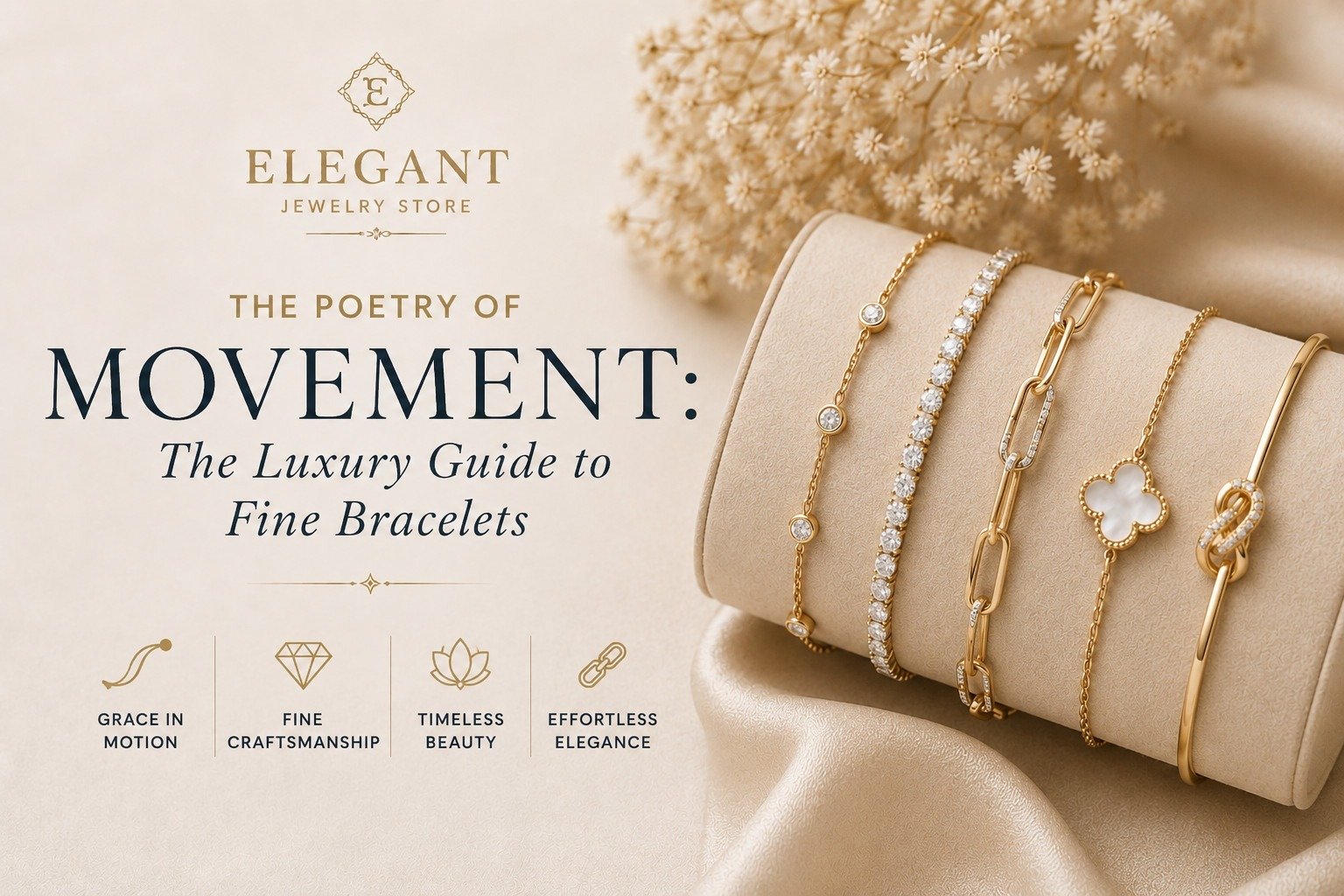
The Poetry of Movement: The Luxury Guide to Fine Bracelets
Of all the adornments in a jewelry collector’s repository, the bracelet holds a uniquely rhythmic charm. While a necklace stays centered and a pair of earrings frames the face from a fixed point, a bracelet is a piece of art in constant motion. It glides along the wrist, catches the light as you gesture, and creates a subtle, tactile connection with every move you make.
Bracelets have been worn across cultures and historical periods for decoration, symbolism, and personal expression. Designs range from rigid cuffs and bangles to flexible chains and stone-set bracelets. Understanding these styles can help shoppers select accessories suited to their preferences, occasions, and everyday needs.
1. The Bangles: Timeless Structure and Sound
Dating back to the ancient Indus Valley civilization, the bangle is defined by its rigid, non-flexible structure. Unlike fluid chains, a bangle maintains its circular shape whether it is sitting on your wrist or resting on your vanity table.
Why They Are Worn
Bangles offer a structured silhouette and can be worn individually or layered. Some create a gentle sound when they move together, while others are designed for a quieter fit. Their cultural associations and styling traditions vary across communities.
Modern Variations
- Solid Closed Bangles: Continuous, rigid circular bracelets that slip over the hand. Despite the style name, they are available in different metals and materials, not exclusively solid precious metal.
- Hinged Bangles: Rigid bracelets with an opening mechanism that can simplify putting them on and taking them off. Closure designs vary, and no hinge or safety clasp guarantees against accidental opening or loss.
- Cuff Bracelets: Usually rigid or semi-rigid bracelets with an opening that allows placement around the wrist. Materials, flexibility, finishes, and comfort vary by design.
2. The Diamond Tennis Bracelet: The Pinnacle of Effortless Luxury
A traditional tennis bracelet features a flexible line of stones or decorative settings. Fine-jewelry examples may feature natural or laboratory-grown diamonds, while fashion-jewelry versions may contain simulated stones. Stone size, setting, metal composition, and flexibility vary by product.
The Famous Origin Story
The tennis bracelet is closely associated with champion Chris Evert, whose bracelet reportedly broke during a US Open match. Accounts have differed on the year: 1987 is frequently cited, while Evert has identified 1978 as the date of the incident. Diamond line bracelets existed before this story, but Evert’s association helped popularize the modern name.
Why It Is Worn
Tennis bracelets can complement casual or formal outfits because of their relatively streamlined appearance. Comfort and suitability for everyday wear depend on the bracelet’s weight, size, setting, flexibility, fastening mechanism, and the wearer’s activities.
3. Link and Chain Bracelets: Fluid Sophistication
Chain bracelets feature interconnected links available in numerous shapes, sizes, and materials. Depending on the product, they may be constructed from precious metals, stainless steel, plated alloys, or other materials. Their strength, flexibility, finish, and care requirements vary.
Iconic Link Styles
- The Paperclip: A contemporary favorite featuring elongated, rectangular links that feel light, airy, and inherently modern.
- The Cuban Link: A classic, interlocking pattern where the links sit entirely flat against the wrist. Thick Cuban links offer an edgy, powerful aesthetic, while slender versions exude classic Italian elegance.
- The Charm Bracelet: A traditional link chain designed explicitly to carry hanging pendants or tokens. Each charm acts as a physical milestone—marking travels, births, or anniversaries—making it the most narrative-driven piece of jewelry a person can own.
| Bracelet type | Structure | Typical characteristics | Styling consideration |
| Bangle / Cuff | Usually rigid or semi-rigid | Weight and materials vary | Can be worn alone or layered if comfortable |
| Tennis Bracelet | Flexible linked settings | Natural, laboratory-grown, or simulated stones depending on product | Consider fit, fastening and activity |
| Paperclip Chain | Flexible elongated links | Different metals, finishes and widths | Can complement other bracelet textures |
| Charm Bracelet | Chain with attached decorative elements | Weight varies with charms and materials | Consider snagging, movement and comfort |
The Art of the Wrist Stack: Creating Balance
In contemporary fine jewelry, the wrist is a canvas for curation. “Wrist stacking”—layering multiple bracelets together—allows you to showcase your personality. However, a great stack should look artfully assembled, not cluttered.
To achieve a perfectly balanced luxury stack, follow this simple structural formula:
1.Choose Your Anchor Piece:The Foundation.
Begin with a bracelet or watch that serves as your main visual accent. Consider its weight, fit, finish, and fastening before selecting additional pieces. The goal is a comfortable combination that reflects your personal style.
2.Introduce a Different Texture:The Contrast.
Add contrast through different link shapes, surface finishes, widths, or decorative accents. For example, a smooth bangle may be paired with a lightweight chain or stone-set bracelet. Check that the pieces can be worn together comfortably without excessive rubbing or catching. For a historical look at creative jewelry layering, see our 2023 jewelry trends retrospective.
3.Vary the Weights and Scale:The Finish.
Complete the arrangement with one or two complementary pieces if desired. Allow sufficient space for comfortable wrist movement, and consider how different bracelet shapes and closures interact. Layering is optional, and some designs are more practical when worn alone.
Sizing and Craftsmanship: The Perfect Fit
When choosing a bracelet at Elegant Jewelry Store, review the individual product’s listed dimensions, materials, closure, and available sizing information. An unsuitable fit may cause discomfort or increase the likelihood of slipping or catching. Fit requirements vary by bracelet design. Explore the different styles in our bracelets collection.
There is no single sizing rule suitable for every bracelet. Measure your wrist and compare it with the product’s sizing guidance. Flexible chains, rigid bangles, cuffs, and hinged bracelets can require different measurements. A comfortable bracelet should allow appropriate movement without creating excessive pressure or slipping off easily.
Bracelet closures vary in design, including lobster clasps, box clasps, fold-over mechanisms, and additional safety catches. Their reliability depends on construction, condition, correct use, and maintenance. No clasp guarantees that jewelry cannot loosen or become lost. Inspect fastenings periodically and follow product-specific care guidance.
Explore bracelet styles and other accessories in our online jewelry collection. Review individual product descriptions, materials, dimensions, and care instructions before choosing a piece.