
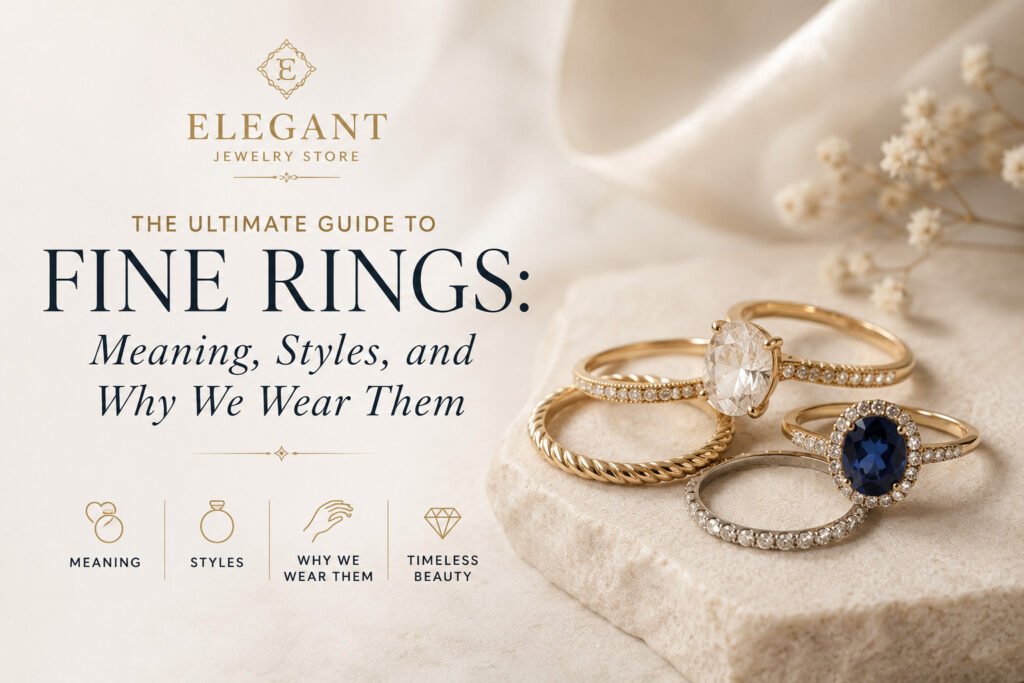
The Ultimate Guide to Fine Rings: Meaning, Styles, and Why We Wear Them
There is an intimate magic unique to the ring. Unlike necklaces or earrings, which are worn primarily for the view of others, a ring sits directly in your own line of sight. Every time you gesture, write, or look down at your hands, it is there—a glistening testament to a promise, a memory, or your own personal aesthetic.
For centuries, rings have served as the ultimate canvas for fine jewelry design. They are far more than mere circles of precious metal; they are symbols of eternity, tokens of deep affection, and bold statements of identity. Whether you are looking to commemorate a lifelong commitment or add a touch of everyday luxury to your collection, understanding the different types of rings and their rich histories can help you find the perfect piece.
1. Engagement Rings: The Icon of Devotion
Perhaps no piece of jewelry carries as much emotional weight or cultural recognition as the engagement ring. Rooted in ancient history, the tradition of exchanging a ring to symbolize a betrothal began with the Romans, who used iron bands to denote a binding legal agreement of marriage. It wasn’t until 1477, when Archduke Maximilian of Austria presented Mary of Burgundy with a diamond ring, that the diamond became the ultimate symbol of romantic endurance.
Why They Are Worn
Engagement rings are worn on the fourth finger of the left hand—a tradition stemming from the ancient belief in the vena amoris (the “vein of love”), which was thought to run directly from that specific finger to the heart. Today, they serve as a brilliant visual declaration of a couple’s intention to wed and a beautiful reminder of a shared future.
Popular Styles
- The Solitaire: A single, breathtaking diamond or gemstone held aloft by minimalist prongs. This style places all the focus on the stone’s purity and sparkle.
- The Halo: A center stone enveloped by a frame of smaller pavé diamonds, a design trick that creates an illusion of greater size while adding vintage-inspired glamour.
- The Three-Stone (Trilogy): Featuring three distinct stones, this design beautifully symbolizes a couple’s past, present, and future together.
2. Wedding Bands: The Eternal Circle
While the engagement ring captures the excitement of a promise, the wedding band represents the quiet endurance of marriage itself. The circular shape of a band is deliberate; it represents an unbroken circle with no beginning and no end, symbolizing eternal love.
Why They Are Worn
Exchanged during the wedding ceremony, these bands are worn by both partners as an everyday symbol of fidelity and marital unity. They are traditionally worn closest to the heart, slipped underneath the engagement ring on the ring finger.
Modern Variations
Gone are the days when a wedding band had to be a plain, uniform gold pipe. Modern luxury bridal fashion favors customized bands:
- Eternity Bands: Adorned with a continuous, unbroken line of identically cut diamonds or gemstones wrapped entirely around the band.
- Contoured Bands: Curved or chevron-shaped bands designed specifically to hug the contours of a low-set engagement ring, ensuring the two pieces sit flush against one another.
3. Signet Rings: The Mark of Identity
Once known as the “gentleman’s ring,” signet rings have a storied history that dates back to ancient Mesopotamia and Egypt. Historically, these rings featured a flat face engraved with a unique family crest, monogram, or coat of arms. They were used by nobility, monarchs, and religious leaders as a personal signature—pressed into hot wax to seal official documents and decree laws.
Why They Are Worn
Today, signet rings have shifted from strict legal tools to highly fashionable expressions of heritage and individuality. They are frequently worn on the pinky or index finger. Whether passed down through generations as a family heirloom or custom-engraved with personal initials, a signet ring bridges the gap between historical significance and modern elegance.
4. Cocktail Rings: Bold, Expressive Glamour
Born during the roaring 1920s American Prohibition era, the cocktail ring is the ultimate celebratory piece. During this time of illegal speakeasies, fashionable women would attend underground parties dressed in avant-garde styles. When raising a glass to take a sip of an illicit cocktail, they wanted to ensure their hands caught everyone’s eye.
Why They Are Worn
Unlike sentimental bridal jewelry, cocktail rings are designed purely for fun, self-expression, and sartorial drama. They feature oversized center stones, vibrant bursts of color, and intricate metalwork. A cocktail ring is typically worn on the right hand (often the middle or ring finger) to explicitly differentiate it from a wedding set. It serves as a conversation starter at galas, dinners, and special occasions.
5. Birthstone and Eternity Rings: Commemorating Life’s Milestones
Rings are brilliant physical anchors for memory. Birthstone rings feature specific gemstones tied to the month of a person’s birth—such as rich sapphires for September, fiery rubies for July, or delicate emeralds for May.
Likewise, milestone rings—often designed as stackable anniversary bands—are given to celebrate major life chapters, such as the birth of a child, a promotion, or a significant wedding anniversary.
| Ring Type | Traditional Metal | Primary Meaning | Best Finger to Wear |
| Engagement | Platinum / 18k Gold | Promise of marriage | Left Ring Finger |
| Wedding Band | Yellow, White, or Rose Gold | Unbroken unity and commitment | Left Ring Finger |
| Signet | Solid Yellow Gold | Heritage and personal legacy | Pinky or Index Finger |
| Cocktail | White Gold / Platinum | Celebratory style and opulence | Right Middle Finger |
Choosing Your Perfect Ring
When curating your jewelry collection, remember that rules are meant to be broken. While tradition dictates where wedding rings or signets “should” go, contemporary luxury fashion invites you to mix metals, stack delicate bands together, and wear statement pieces on whichever finger feels right to you.
The most important consideration when investing in a fine ring is the craftsmanship. Ensure your pieces are crafted from enduring materials like solid 14k or 18k gold and platinum, featuring securely set, ethically sourced gemstones. After all, a high-quality ring is not just an acquisition for today—it is a piece of wearable art meant to be loved, admired, and eventually passed down to the next generation.
Explore our curated collections at elegantjewelrystore.com to find the ring that speaks to your unique story.